
Wound Exudate in Wound Healing
bmccurdy@hmpgl…


Upcoming Webinar
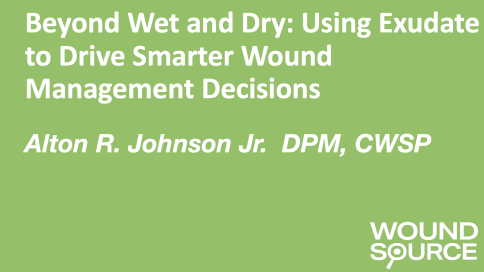
Beyond Wet and Dry: Using Exudate to Drive Smarter Wound Management Decisions
Alton R. Johnson Jr., DPM, DABPM, FACPM, FASPS, FFPM RCPS (Glasg), CWSP
Exudate can reveal far more than whether a wound is simply “wet” or “dry.” In this practical webinar, wound care clinicians will explore how to interpret exudate within the broader clinical picture and use those insights to support more thoughtful, responsive care.
Through audience reflection, a practical decision-making framework, and brief case examples across wound types and care settings, the session will challenge common assumptions about exudate management and dressing choice. Attendees will leave with a clearer, more systematic approach to navigating complex or stalled wounds and adapting care as wound conditions evolve.
Learning Objectives
- Analyze exudate characteristics, including volume, viscosity, composition indicators, and behavioral patterns, as dynamic clinical data points that reflect the wound’s healing status over time
- Apply a structured exudate assessment framework to differentiate between dressing categories and select the most appropriate option based on wound behavior, not wound type alone
- Recognize clinical scenarios where current exudate management is insufficient and determine appropriate next steps, including dressing change, category adjustment, or escalation to a wound care specialist
Fact Sheet
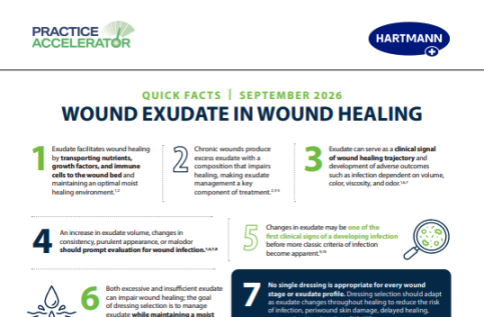
Quick Facts: Wound Exudate in Wound Healing
Click below to view this fact sheet to learn more about how wound exudate factors into healing strategies.

Sponsored by

Important Terms to Know

Important Terms to Know: Wound Exudate
Browse these important definitions to solidify your learning.