
Diabetic Foot Ulcers
christiana
Thu, 05/16/2024 – 09:45
Foundational Concepts in Diabetic Foot Ulcers
Diabetic foot ulcers impact millions of adults globally and early detection and intervention could potentially save limbs and lives. In this e-book, learners can introduce themselves to key concepts and frameworks to chart a course towards improving patient outcomes.
MPM Medical develops and markets wound care and incontinence care products nationally.
1800 Big Town, Suite 800
Mesquite, TX 75149
United States
Toll free:(800) 232-5512
Phone:(972) 893-4090
Fax:
Email:
Website:
Products
Clinical Challenges in Diabetic Foot Ulcers
This case-based discussion will highlight treatment approaches to multiple diabetic foot ulcer scenarios, including some particularly unusual or challenging cases.
Cyaandi Dove, DPM
Offloading Options Clinicians Should Know When Managing Diabetic Foot Ulcers
May 22, 2024
Diabetic foot ulcers (DFU) pose significant challenges in clinical management, often requiring effective offloading strategies to promote healing and prevent complications. Offloading devices aim to alleviate high plantar tissue stress by diminishing plantar pressure, minimizing weight-bearing activity, and increasing treatment compliance.1-4 With the 2023 International Working Group on the Diabetic Foot (IWGDF) guidelines serving as our compass, let’s delve into various essential offloading options clinicians should know.
Nonremovable Knee-High Options
Nonremovable knee-high offloading devices, such as total contact casting (TCC) and instant total contact casting (iTCC), are integral in managing DFUs. The 2023 IWGDF Guidelines regards these nonremovable devices as the gold standard for offloading DFUs.5,6 Specifically, the literature supports using nonremovable knee-high devices to offload DFUs in the plantar forefoot or midfoot region with mild infection or mild ischemia.5,6
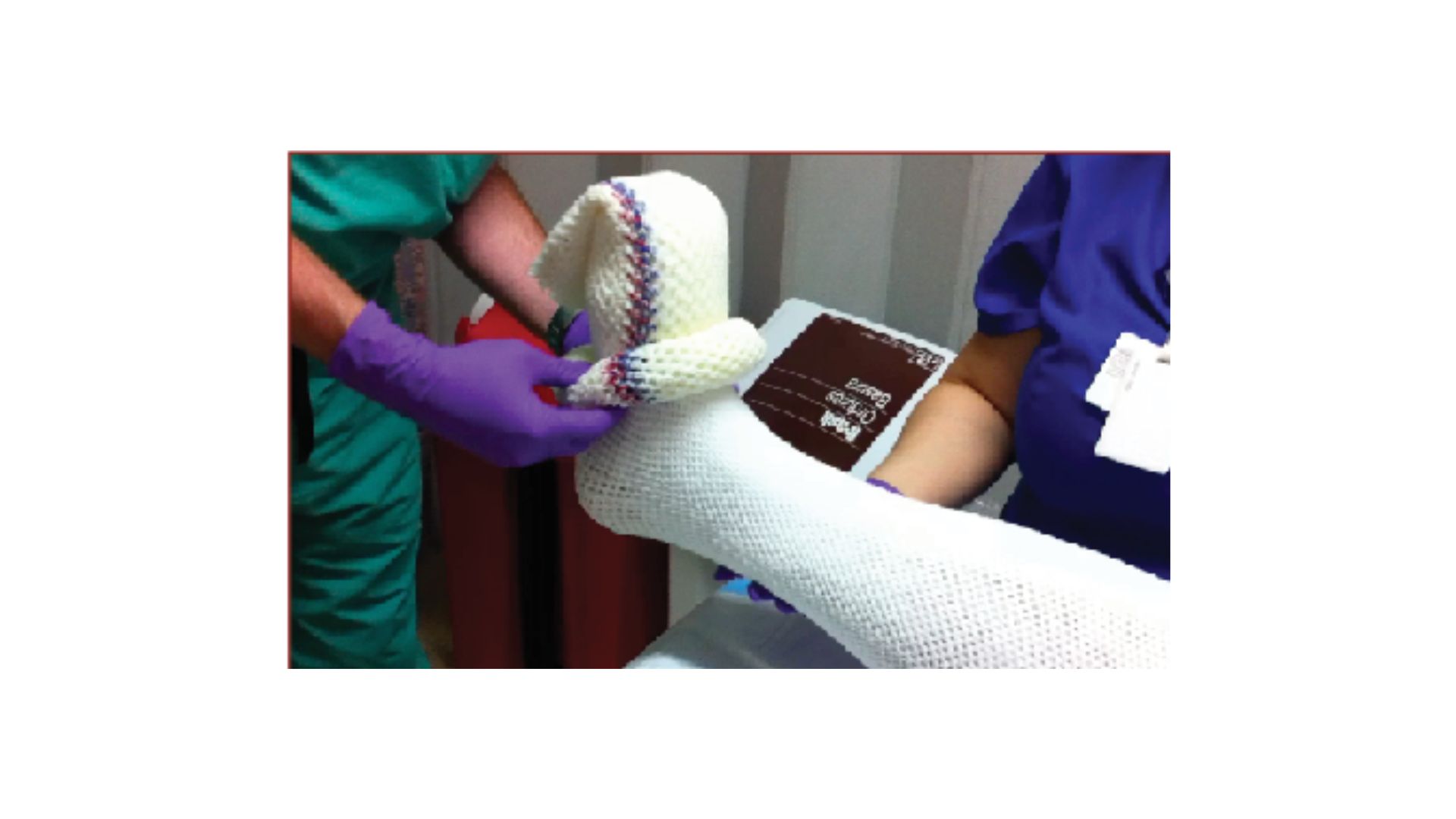
Application of a total contact cast involves meticulously molding it to the foot and ankle, delivering contact and support while allowing for limited movement.1,2 iTCC devices are typically prefabricated, knee-high cast walkers that clinicians can transform into non-removable devices by applying an adhesive wrap.3,5-8 These devices provide consistent pressure distribution, immobilization, and protection, beneficial in instances of severe peripheral and motor neuropathy.2,3,5,9,10
Piaggesi et al compared a prefabricated irremovable device with traditional TCC for managing DFUs in outpatients with neuropathic plantar ulcers.10 This study found similar effectiveness between the prefabricated device and traditional TCC in terms of healing rates and adverse events. Additionally, the prefabricated offloading device reduced treatment costs in their study by 78% compared to TCC.10 Moreover, the walker demonstrated better practicability, with a 77% reduction in application time and a 58% reduction in removal time compared with TCC, resulting in higher patient satisfaction.10 Additionally, a meta-analysis from 2023 encompassing 4 RCTs suggested comparable healing outcomes between TCC and nonremovable walkers, further supporting the efficacy of both approaches.8 Although these devices are the gold standard in offloading DFUs, patients may face challenges with compliance due to factors such as job commitments, driving, limited access to wound care clinics, and obstacles from hot climates.3,5,7,8
Removable Offloading Devices
Clinicians may consider utilizing removable knee-high or ankle-high devices as alternatives to nonremovable ones, especially when consistent wound monitoring and mobility is necessary. These offloading devices include removable knee-high walkers, customized bivalved TCCs, lower height cast walkers, forefoot offloading shoes, rearfoot offloading shoes, cast slippers/shoes, and postoperative healing shoes.3,5-7 These are considered second-tier offloading devices.3,5-7
As per the 2023 IWGDF guidelines, if both mild infection and mild ischemia are present or if either moderate infection or moderate ischemia is present, a provider should consider using a removable knee-high or ankle-high offloading device.6 If both moderate infection and moderate ischemia are present, or if either severe infection or severe ischemia is present, the IWGDF guidelines recommend addressing the infection or ischemia primarily and then using a removable device.6,8 According to a recent meta-analysis, there appears to be minimal to no difference in the rates of wound healing between removable knee-high and removable lower height offloading devices.8 Based on the findings of this study, the IWGDF committee updated the 2023 guidelines to classify both options under second-line therapy.
Medical-Grade Footwear
Medical-grade footwear plays a critical role in DFU wound management and is classified as third-line therapy.6 Medical-grade footwear is a viable option for individuals with DFUs when nonremovable or removable devices are unavailable or contraindicated.6 Crafted with high-quality materials, this footwear design aims to address the unique needs of patients with or at high risk for foot ulcers. The construction of these shoes usually has extra depth and a wide toe box with soft inner linings to accommodate foot deformities and bony prominences.5,6 They may have custom insoles, adjunctive features like foam or felt padding, and/or rocker bottom soles.6 It is important to note that these shoes are best used in conjunction with (not as a replacement for) proper offloading techniques, and are not recommended as standalone treatments for DFU.6
Surgical Offloading
Surgical offloading is a consideration when conservative options are insufficient, providing targeted relief for nonhealing ulcers resistant to standard treatment alone. A nonhealing ulceration is typically defined as a DFU that fails to decrease in size by >50% within 4-6 weeks of treatment.1,3,5-7 Some clinicians may also consider surgical offloading when appropriate for patients at high risk for DFU, or to mitigate the risk of ulcer recurrence after initial DFU healing.
For ulcerations on the lesser toes with flexible deformities, the IWGDF guidelines recommend consideration of a digital flexor tenotomy in conjunction with an offloading device.6 Additionally, if a plantar metatarsal head ulceration does not heal with traditional offloading alone, options such as Achilles tendon lengthening, metatarsal head resection, or metatarsal osteotomy may be considered, depending on the severity of the deformity, in conjunction with an offloading device.5,6 Moreover, if a plantar hallux wound does not respond to offloading alone, clinicians could explore joint arthroplasty combined with an offloading device.6 For non-plantar ulcerations, various interventions, including removable offloading devices, footwear adjustments, toe spacers, custom orthoses to address biomechanical deformities, or digital flexor tenotomies in the presence of a dorsal toe wound can be beneficial.5,6 Accordng to a 2021 review by Lazzarini and Jarl, “Contraindications to these surgical procedures include moderate-to-severe ischemia, moderate-to-severe infection, and moderate-to-severe edema.”5
In Conclusion
One must not neglect the non-involved side when looking at offloading for DFU. The 2023 IWGDF guidelines recommend considering implementing a shoe lift on the contralateral side when utilizing an offloading device.5,6,8 This aims to enhance balance, comfort, and compliance of the offloading device while accommodating what effectively becomes a functional limb-length discrepancy.5,6
Effective offloading is paramount when managing diabetic foot ulcers, and clinicians must be well-versed in offloading options tailored to individual patient needs. By implementing the offloading pathway outlined in 2023 IWGDF guidelines and drawing insights from various meta-analysis studies, healthcare professionals can navigate the complexities of DFU management with confidence, ultimately improving patient outcomes and quality of life.
Dr. Gandhi Patel is a diplomate of the American Board of Podiatric Medicine and has practiced in North Carolina and New Jersey.
References
1. Jeffcoate WJ, Bus SA, Game FL, et al. Reporting standards of studies and papers on the prevention and management of foot ulcers in diabetes: required details and markers of good quality. Lancet Diabetes Endocrinol. 2016;4(9):781-788. doi:10.1016/S2213-8587(16)30012-2
2. Lazzarini PA, Jarl G, Gooday C, et al. Effectiveness of offloading interventions to heal foot ulcers in persons with diabetes: a systematic review. Diabetes Metab Res Rev. 2020;36 Suppl 1(Suppl 1):e3275. doi:10.1002/dmrr.3275
3. Bus SA, Armstrong DG, Gooday C, et al. Guidelines on offloading foot ulcers in persons with diabetes (IWGDF 2019 update). Diabetes Metab Res Rev. 2020;36 Suppl 1:e3274. doi:10.1002/dmrr.3274
4. Lazzarini PA, Crews RT, van Netten JJ, et al. Measuring Plantar Tissue Stress in People With Diabetic Peripheral Neuropathy: A Critical Concept in Diabetic Foot Management. J Diabetes Sci Technol. 2019;13(5):869-880. doi:10.1177/1932296819849092
5. Lazzarini PA, Jarl G. Knee-High Devices Are Gold in Closing the Foot Ulcer Gap: A Review of Offloading Treatments to Heal Diabetic Foot Ulcers. Medicina (Kaunas). 2021;57(9):941. Published 2021 Sep 6. doi:10.3390/medicina57090941
6. Bus SA, Armstrong DG, Crews RT, et al. Guidelines on offloading foot ulcers in persons with diabetes (IWGDF 2023 update). Diabetes Metab Res Rev. 2024;40(3):e3647. doi:10.1002/dmrr.3647
7. Fernando ME, Horsley M, Jones S, et al. Australian guideline on offloading treatment for foot ulcers: part of the 2021 Australian evidence-based guidelines for diabetes-related foot disease. J Foot Ankle Res. 2022;15(1):31. Published 2022 May 5. doi:10.1186/s13047-022-00538-3
8. Lazzarini PA, Armstrong DG, Crews RT, et al. Effectiveness of offloading interventions for people with diabetes-related foot ulcers: A systematic review and meta-analysis. Diabetes Metab Res Rev. 2024;40(3):e3650. doi:10.1002/dmrr.3650
9. Armstrong DG, Boulton AJM, Bus SA. Diabetic Foot Ulcers and Their Recurrence. N Engl J Med. 2017;376(24):2367-2375. doi:10.1056/NEJMra1615439
10. Piaggesi A, Macchiarini S, Rizzo L, et al. An off-the-shelf instant contact casting device for the management of diabetic foot ulcers: a randomized prospective trial versus traditional fiberglass cast. Diabetes Care. 2007;30(3):586-590. doi:10.2337/dc06-1750
The views and opinions expressed in this blog are solely those of the author, and do not represent the views of WoundSource, HMP Global, its affiliates, or subsidiary companies.

The Impact of Diabetic Peripheral Neuropathy on DFUs
May 21, 2024
Hi, this is Dr. Matt Garoufalis. I’m a podiatrist, and I practice in Chicago. I have a private practice in Chicago, and I was involved in the VA system for 39 years. I was at 2 VAs here in Chicago. I was the associate chief in one, I was a residency director, so I did the whole gamut of teaching, educating, doing the administration stuff, and of course, because I’m also a past president of the American Podiatric Medical Association, I was deeply involved in the politics of medicine as well.
But my passion is teaching residents and students and working with them in wound care. I didn’t think it was going to be wound care for me, but I thought it was going to be sports medicine like many other folks. But once I got to the VA and fell in love with those people and helped them with their wounds, it was wound care all the way and limb salvage.
Diabetic foot neuropathy is an unfortunate consequence of having diabetes. Up to 50% of the patients that have diabetes will get some form of diabetic neuropathy. A lot of it has to do with diet, a lot of it has to do with control of their diabetes, but sometimes it just happens despite the fact that those patients are well controlled and eating well. It just is because the diabetic patient, their chemistry changes, and the way that they break down different products changes in their body and doesn’t work the same as a nondiabetic patient. As a result, there’s certain byproducts of the way things are broken down that contribute to the breakdown of the nervous system, and eventually they get different forms and different stages of diabetic neuropathy. So it’s something that we want to keep an eye on with these patients and we do screenings all the time. And as they become neuropathic, we want to be able to educate them on ways to prevent the consequences of neuropathy.
Unfortunately, diabetic foot ulcers are probably the end stage product of diabetic neuropathy. When a patient has diabetic neuropathy, they lose the ability to feel. They lose the protective sensation of pain. So they don’t know if they’ve stepped on something sharp. They don’t know if they’re walking with a rock in their shoe or a folded up sock in their shoe or if they have a different kind of a pressure bearing on the bottom of their foot that has resulted in a blister. And so, being not able to understand pain and as a result, react to that pain, causing them to take a look at their foot or to change the way they walk or to take their shoe off and see if there’s something in there, they don’t realize it, and so they get a wound. And once they get a wound, then, because of all these changes I mentioned earlier in the diabetic environment, they’re more prone to that wound ulcerating and not healing appropriately. So once a patient has diabetic neuropathy, there’s a whole checklist that we want to go over with them that they need to do every day, and maybe several times a day, to protect themselves against the consequences of injury.
There’s lots of screening measures that are available. Typically, the ADA says that patients who are diabetic should be screened once a year. And indeed, yeah, that’s right. That’s the minimum level. I like to say 2 times a year, and in the VA it’s probably a little bit more often than that. But when we do a diabetic foot examination, we use a 10-gram monofilament to test for neuropathy. We can also test sharp and dull sensation. We can test the patient’s reflexes, and we can even use vibration as a test to determine at what stage the neuropathy is.
So there’s lots of different ways that we can evaluate if the patient has neuropathy and to what extent their neuropathy is present, and once we have determined that, then we have to ask the patient, okay, is this a painful neuropathy? Are you having pain with this, or is it just a loss of sensation?
And there are medications out there that of course we can give the patient to help them with this. First of all we do want to make sure that they’re under control as far as their glucose goes; that’s primary importance because that can help to limit the effects of neuropathy. There’s topical medications like capsaicin, and now there’s different varieties of capsaicins that can be used topically. And then there’s oral medications that can be used as well. There’s pregabalin and gabapentin that can be used. There’s tricyclic antidepressants that are used. And these can be used in combination or separately. And if the patients are really a lot of pain, we can go to things like nerve stimulation and things like that.
So there’s a variety of different ways to treat diabetic neuropathy once it’s diagnosed, and it’s a very individual regime. Each patient is treated a little bit differently and has to be monitored a little bit differently, and because neuropathy is a condition that changes over time, many times these medications that we provide for the patients also have to be changed with time and, therefore, monitored on a regular basis.
The views and opinions expressed in this blog are solely those of the author, and do not represent the views of WoundSource, HMP Global, its affiliates, or subsidiary companies.

Alginates and Other Emerging Dressings for Diabetic Foot Ulcers
May 21, 2024
Hi, my name is Cathy Milne. I am an adult nurse practitioner and board certified wound, ostomy, and continence nurse practitioner and my certification is CWOCN-AP through the Wound, Ostomy, and Continence Nursing Society. I practice in Bristol, Connecticut and my practice actually goes across the continuum I see patients in acute care setting. I see patients in an outpatient setting. I see patients in long-term care, assisted living, and I’ll even make house calls for the truly homebound and work with home health agencies to get patients the best care that they can at home.
Advanced wound care dressings are needed for all chronic and acute care wounds, especially when you think about the diabetic foot wound. You have to think about the pathophysiology that is associated with that diabetic foot wound. So a couple of things, number one, they are mostly neuropathic, and they can also be ischemic. So they can be neuroischemic also.
And so when you have a neuroischemic wound, you don’t have good blood flow, plus the pathophysiology with the diabetes actually reduces blood flow through a number of mechanisms. So the long story short here is that you’re going to have biofilm and bioburden on that wound. So you’re going to have to address that. And you’re also going to have a lot of inflammation. So you have to address inflammation.
So when you’re thinking about dressings, you want to think about the pathophysiology. And then you want to start thinking about what dressings can go on there. And they’re all going to be … you have to use an advanced dressing.
So it’s gonna also have to think about the exudate that may be coming off of that wound. And where that patient is. And then you figure out which advanced dressing, but you cannot not have an advanced dressing with the diabetic foot wound.
There’s so many dressings to think about when you’re managing a diabetic foot wound, and you have to figure out what stage of healing they are in. So are you trying to debride that wound, in which case there are a number of dressings that can do things faster and some things that can do a little bit slower? Are you trying to manage infection? Are you trying to manage inflammation? So I use that TIMERS concept, so T for tissue, I for infection and inflammation and M for moisture balance, E for the edge effect. And so not only do we have traditional advanced wound care dressings that manage these issues that we see in the TIMERS, but we also have cellular and tissue-based products, which you would most likely use towards the end of that continuum, meaning your wound bed is clean, it’s free of infection. you’ve reduced your biofilm as much as you possibly can, and then your wound bed is well-prepared to accept these advanced cellular and tissue-based products.
So when you’re trying to figure out if you need to change the type of therapy you’re giving, I think we all traditionally go on a wound measurement but there may be some difficulties with that and a lot depends on who is measuring and how much pressure maybe they’re putting on a probe when they’re exploring that wound because some people are not as forthright and feel confident enough really probing down. And so I think when we look at measurements that’s really the standard. I think we really need to start thinking about technology. There are a number of devices out there that can tell us if we have a bioburden, how our blood flow is. So I think we need to start moving towards these advanced technologies. Unfortunately, these things are a little bit more expensive than most of our administrators really want to spend. So some of us are still in the more traditional wound measurement phase and some of us are more advanced. We really need to start pushing towards those advanced technologies because they give us better information earlier on, so we can act upon that.
When we start thinking about the alginates, they are a class all of in itself, and we have to think about how they are constructed and what are they really made of. So when you think about alginates, they’re made of seaweed, but how they’re constructed, meaning how they are physically constructed, because they can be woven, they can be carded. And so their manufacturing process can be different. So that can affect how much exudate the dressing can absorb. They can have additives in there, such as manuka honey or silver. Or you can have a collagen put in in some of these alginates, so you really need to know what kind of alginate you’re really dealing with.
In addition, we have to think about the type of alginate that’s in there. So there can be calcium alginates, there can be sodium alginates, there can be calcium sodium alginates, and so they work a little bit differently when placed on the wound bed. And then the type of alginate. So there’s M-blocks and G-blocks. Now the G-blocks do not disperse, and so they hold not as much as the M-block type of alginates, but you can get them out of the wound really easily. If you are using an M-block, alginate, and you have to ask your rep what kind of alginate you have or call the company’s medical science liaison who can tell you some of these details because it’s not usually on the package or in the product insert. The M-blocks actually disperse really well and turn into a gel and so they are less painful when they are removed from the patient rather as compared to the G-block alginates.
So, you have to match your patient characteristics to the type of alginate that you have available because it’s unlikely that your system will carry three or four different types of alginate. They will usually have one brand. So you need to know what the characteristics of that brand is, how it’s constructed, and when it’s appropriate to put it on that case.
So, I do use alginates in my practice in managing the diabetic foot wounds. I use a number of other products too, but I will use alginates when I have a little bit of bleeding and the patient gets a little upset about that because some of the M-block type of alginates can actually help reduce that bleeding.
They help clot because the calcium in the M-block dressings and to a lesser extent the G-block calcium alginates will actually impact the clotting cascade so you can actually clot the wound. So if your patient is suddenly having a little blood in the wound with the formation of angiogenesis or early angiogenesis and they’re staining their socks and they’re upset, certainly using that is helpful. But also we also see some anti-inflammatory effects. The calcium alginates actually will improve or reduce a little bit of the inflammation.
Once you have the macrophages in there responding to the issues in the wound with bioburden, the alginates actually will help tamp down some of that inflammatory response. In addition, what they’re going to do is trap exudate and trap bacteria and some of the inflammatory markers. So if you have that in the wound, that is where you’re going to want to think about using a calcium alginate.
I think we have to remember that in the U.S., both alginates and gelling fibers, or also the trade name would be a hydrofiber, are actually under the same category in terms of reimbursement. And they do act very differently. The alginates will actually do lateral wicking, and the gelling fibers do vertical wicking.
So when you think about using an advanced dressing, especially in the diabetic patient, you may want to think about how you want to protect that periwound. If there is maceration, you’re going to actually have more bacteria and eventually have more and bigger problems with your diabetic foot.
So thank you very much. I’ll hopefully that’ll be your tip for the day.
The views and opinions expressed in this blog are solely those of the author, and do not represent the views of WoundSource, HMP Global, its affiliates, or subsidiary companies.

Ulcer Remission: Preventing DFU Recurrence
May 24, 2024
Hi there, my name is Stephanie Woelfel, I’m a Doctor of Physical Therapy and a board certified wound specialist through the American Board of Wound Management and the American Board of Physical Therapy Specialties. I am currently an Associate Professor of Clinical Physical Therapy with a dual faculty appointment in the Department of Surgery at the University of Southern California.
Ulcer remission is really that period when the wound closes but we don’t you know haven’t gone through the time frame yet where we would consider it healed. So we think about the correlation to patients with cancer, where they go into remission, but there’s a much longer period of time before their cancer would be considered cured or something like that.
So we’re trying to think of wounds in a similar way, especially the wounds that tend to recur frequently. So think about diabetic foot ulcers, venous leg ulcers, those wounds that can tend to recur and come back over time.
So we think of this term of ulcer remission as where that wound is closed, but the patient still needs to be actively monitored, right? So we’re looking at, are we still using protective dressings in the case of the diabetic foot? How are we offloading? How are we reintroducing them to activity? And really, the thought behind wound remission is that the more we can kind of have a very concrete and objective way that we manage these patients as they move into remission and then continue down their healing path, hopefully the longer we’re keeping them out of the clinic, the longer they’re living a healthy active life without having a wound. So, I think this is something that we’re trying to introduce as far as this idea of wound remission as kind of this other phase maybe of healing because we’re trying to prevent recurrence or at least extend the period of healing between recurrences for these patients.
And I think the other part of this idea of remission and the types of monitoring and kind of active management that we’re doing during that timeframe is that if a wound does recur, that we’re catching it really early in that process. So that maybe instead of this patient coming back in and having to go through several more months. of wound care for a recurrence, if we can catch that really early, then maybe it’s a slight tweak and they only have to do, you know, their their wound care for an additional week or something like that.
And we can kind of make the adjustments, whether it’s in their orthotic or their offloading or their compression, that can kind of make the difference before it gets to the point where it’s the you know, really full -blown wound situation again. So I think ways to think about, you know, supporting this idea of the diabetic foot ulcer and remission is really to make this part of your practice. Because oftentimes we know that these patients have kind of ongoing needs as far as education, different things like that.
So I really think making this kind of a concrete part of your program can be really powerful. So, you know, making sure that the patient knows how to do their daily foot exams, and that they have the range of motion that and the eyesight, the vision that they need to do those things. If not, who can they call? You know, do they do that? They have a family member? Do they have a friend? Can you put them into a foot selfie program so that someone else is kind of checking in on their feet and helping them with that? You know, making sure that they have really good foot gear that they the right kind of orthotic and the right kind of shoe, and that they understand that if the orthotic isn’t fitting correctly, maybe they are seeing a little bit of rubbing or a little bit of a red spot, that does not mean you stop wearing that shoe and you go back to your old one.
Okay, we see that a lot where they’re like, oh, well, the orthotic didn’t work. And it’s like, well, what do you mean it didn’t work? Oh, I was getting a little red spot. Okay, that just means we have to go back in and see the orthotic and we have to get that fixed.
It doesn’t mean that you stop wearing these altogether and go back to the thing that caused your wound in the first place. So there’s a lot of things that come up after a wound closes that patients still need help navigating, talking with them about their return to activity, having someone that we’ve been offloading for months, just all of a sudden getting back into shoe gear and doing whatever the heck they feel like doing is not going to be something that’s going to help to sustain that wound remission, right? It’s likely that they’re going to fall back into a pattern that probably contributed to the wound in the first place. So we have to be those, you know, those educators, those people that are really traveling this road with them.
And that doesn’t mean giving them a barrage of information at their last visit and thinking that they’re going to remember all of that or know how to apply it. And that’s where I think as physical therapists we can play a really big role in this because you know we are experts at movement analysis, we understand what patients need to do to kind of you know titrate their activity, we can help them monitor their step counts, different things like this.
So I think if you don’t have PTs involved, that potentially looking for a way to bring them into your remission clinic or remission part of your practice could be a really helpful way to help your patients kind of extend that remission and have more time before they might have a recurrence.
The views and opinions expressed in this blog are solely those of the author, and do not represent the views of WoundSource, HMP Global, its affiliates, or subsidiary companies.
Sponsored by
MPM Medical