Advancing Integral Debridement in Clinical Practice
kfedyszyn@hmpg…
Nurse-Driven Continuous Integral Debridement for Improved Patient Outcomes
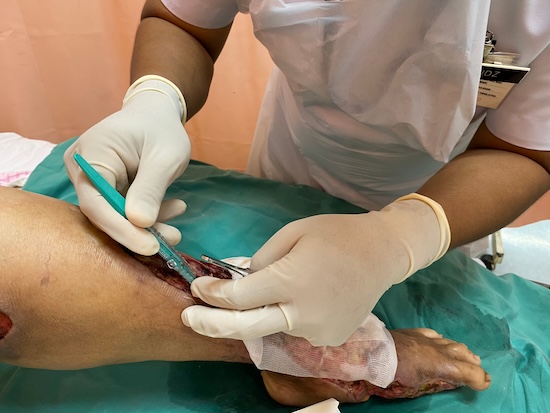
This webinar presents a nurse-driven approach to continuous integral debridement, focusing on practical, non-sharp strategies to support ongoing wound bed preparation. Participants will learn how to implement a structured Cleanse → Debride → Cleanse → Dress workflow, translating evidence-based guidance into consistent bedside practice to remove barriers to healing.
Learning Objectives
- Apply the concept of integral debridement in clinical practice using a structured Cleanse → Debride → Cleanse → Dress workflow when sharp debridement is not an option.
- Identify opportunities to advance continuous wound bed preparation through non-sharp debridement strategies, including effective use of cleansing, dressing selection, and treatment sequencing
Dieter Mayer, MD, FEBVS, FAPWCA and Yvette Mier BSN, RN, CWON

Optimizing Integral Debridement: A Multidisciplinary Approach to Maintaining Healing Momentum
May 1, 2026
Categories
The views and opinions expressed in this content are solely those of the contributor, and do not represent the views of WoundSource, HMP Global, its affiliates, or subsidiary companies.

Slough as More Than Nonviable Tissue: Combining Microbiological and Clinical Perspectives on Continuous Wound Bed Preparation for Optimal Wound Healing
May 1, 2026
Categories
Slough as a Biologically Active Barrier to Healing
Slough is a common feature of wounds, composed mainly of accumulating devitalized tissue that varies in clinical presentation, with ranges of color, texture, thickness, and adherence.1,2 Slough has previously been described as non-functional tissue in the wound bed; however, our more recent understanding of slough has evolved into far more than just passive debris requiring debridement.1 In fact, research has shown that slough is its own biologically active structure and its composition is associated with delayed wound healing.1
From a molecular perspective, slough is comprised of a complex and heterogenous mixture of components such as collagen, fibrin, extracellular matrix proteins, white blood cells, proteases, and microbial elements.1,2 Slough can also have high concentrations of proinflammatory cytokines, which are indicative of a prolonged inflammatory environment that may be related to stalled wound healing.1,2 Slough composition can vary based on the location on the body, wound type (acute vs hard-to-heal), and whether it is adherent devitalized tissue or tenaciously attached polymerized exudates.1,2
While slough is a common feature of both acute and chronic/hard-to-heal wounds, its presence and role in each type of wound greatly differ. Slough in healing wounds may contain harmless components that do not interfere with healing, but which can and should be removed where possible. Slough is typically more problematic in chronic wounds where it is more abundant, inflammatory, difficult to remove, and prone to microbial survival and persistence.2 Thus, removal of adherent or abundant slough in chronic/hard-to-heal wounds is essential to prevent complications, such as infection, and ultimately to promote wound healing.
Translating Slough Pathophysiology Into Clinical Decision-Making
From a clinical standpoint, slough signals the need for targeted assessment and swift action. Effective wound management requires accurate assessment of the wound and possible/potential associated local infection.3,4 Early recognition and intervention for removal of slough as well as continuous monitoring is essential along the continuum of care for patients with chronic/hard-to-heal wounds.2 The presence of slough in chronic wounds indicates that the wound environment requires intervention to reduce inflammatory burden and microbial load, with the goal of preserving viable tissue. As slough contains microbial and host components that can ultimately prevent proper wound healing, debridement and therapeutic cleansing is essential for its removal.2,4 Furthermore, patients with chronic wounds often have recurring slough, which requires continuous debridement, through complimentary methods, to prevent reaccumulation and promote a healing trajectory. Integral debridement, a synergistic and individualized approach that uses multiple debridement techniques, such as an initial, more aggressive primary technique followed by an adjunctive and continuous debridement technique, is an advantageous method to prepare the wound bed and promote an optimal healing environment.2
Selecting the primary and secondary debridement techniques depends on the individual patient’s wound etiology, patient comorbidities and tolerability, treatment goals, and clinician expertise and availability.2,5 When clinically indicated, selective sharp debridement for chronic wounds is a favorable primary debridement technique to prepare the wound bed by careful removal of slough and other nonviable tissue while conserving healthy surrounding tissue. This primary debridement step is often the fastest and most effective initial intervention and is an excellent technique for the initial removal of slough.2,5
Continuous Wound Bed Preparation and the Role of Slough-Managing Dressings
Following the initial primary debridement, secondary debridement methods are essential for chronic wounds to keep slough from re-accumulating and to continue on the healing trajectory. One of the most important shifts in modern wound care is the move away from episodic intervention toward continuous wound bed preparation.2
Specialized wound dressings are commonly used to continuously maintain a clean wound bed following primary debridement. Some advanced dressings utilize multiple mechanisms of debridement, such as autolytic to maintain a moist wound environment to support endogenous enzymatic tissue breakdown, mechanical to physically loosen and remove nonviable tissue and biofilm, and/or charged fibers to promote active sequestration of slough and debris.2,5
For example, UrgoClean Ag dressings (Urgo Medical North America) utilize multiple mechanisms for debridement, combining electrostatic binding via charged fibers for active sequestration with moisture-mediated autolytic debridement and adjunctive mechanical trapping for continuous debridement of slough, devitalized tissue, and debris. In addition, the incorporation of silver also provides sustained antimicrobial activity to control bioburden and reduce the risk of infection. Thus, the combined actions of these dressings make them effective for promoting continuous wound healing and attractive for health care providers and caregivers given their accessibility and favorable tolerability by patients.7-10
Conclusion: A Proactive, Integrated Approach to Slough and Future Directions
Ultimately, slough should be viewed as a dynamic and biologically active component of the wound environment. If not addressed adequately, slough can perpetuate inflammation, support microbial survival, and delay proper and timely wound healing. By integrating molecular biological insight with bedside clinical expertise, clinicians can make informed decisions that prioritize early recognition of slough, select appropriate and individualized integral debridement methods, and perform continuous wound bed preparation. Proactive patient management includes using dressings that support ongoing slough removal, which is central to maintaining a wound environment that ultimately promotes healing. More research is needed to further understand the potential prognostic ability of slough1 as well as additional consensus guideline agreement on the continuous management of slough in the setting of chronic wounds.
References
- Townsend EC, Cheong JZA, Radzietza M, et al. What is slough? Defining the proteomic and microbial composition of slough and its implications for wound healing. Wound Repair Regen. 2024;32(6):783-798. doi:10.1111/wrr.13170
- Mayer DO, Tettelbach WH, Ciprandi G, et al. Best practice for wound debridement. J Wound Care. 2024;33(Sup6b):S1-S32. doi:10.12968/jowc.2024.33.Sup6b.S1
- Sibbald RG, Elliott JA, Persaud-Jaimangal R, et al. Wound Bed Preparation 2021. Adv Skin Wound Care. 2021;34(4):183-195. doi:10.1097/01.ASW.0000733724.87630.d6
- Swanson T, Ousey K, Haesler E, et al. International Wound Infection Institute. Wound Infection in Clinical Practice: Principles of Best Practice, Third Edition (International Consensus Update 2022). Wounds International; 2022. https://woundinfection-institute.com/wp-content/uploads/IWII-CD-2022-web.pdf
- Lantis JC, et al. Toward a practical framework for debridement in chronic wounds: Findings from a US multidisciplinary consensus panel. Wounds. 2026;38(3 Suppl):S1-S20. doi:10.25270/wnds/25155
- Nair HKR, Balasubramaniam S, Frescos N, et al. Autolytic continuous debridement with a focus on biofilm management: Consensus document for the APAC region. London: Wounds International. 2024. https://woundsinternational.com/wp-content/uploads/2024/10/URG24_CD_APAC-debridement_WINT-WEB.pdf
- Tiwari A, Menon RR, Pillai AV, Dung NV, Thi Cam Van D. Clinical evaluation of UrgoClean Ag in patients with pressure injuries. Wounds International. 2024;15(2):1-11.
- Al Humaidi N, Badahdah H, Sarmiento KC, et al. UrgoClean Ag and UrgoStart Plus in real life. Wounds Middle East. 2024;Supplement:1-23.
- Dowsett C. A multidimensional approach to Wound Bed Preparation using UrgoClean Ag. Wounds UK. 2023;19(4):78-85. https://wounds-uk.com/wp-content/uploads/2023/11/WUK_2023_19_4_78_85_Dowsett.pdf
- Dissemond J, Dietlein M, Neßeler I, et al. Use of a TLC-Ag dressing on 2270 patients with wounds at risk or with signs of local infection: an observational study. J Wound Care. 2020;29(3):162-173. doi:10.12968/jowc.2020.29.3.162
The views and opinions expressed in this content are solely those of the contributor, and do not represent the views of WoundSource, HMP Global, its affiliates, or subsidiary companies.

Advances in Hypochlorous Acid for Optimal Wound Care
May 1, 2026
Categories
Hypochlorous Acid Mechanism of Action: Dual Antimicrobial and Debridement Effects
Therapeutic wound cleansing and debridement are two fundamental components of wound bed preparation that work synergistically for optimal wound healing.1-3 Integral debridement is a newly defined strategy that utilizes multiple debridement techniques over time as an individualized approach to traditional debridement, further optimizing wound bed preparation and wound healing outcomes by accounting for both patient and health care setting factors.3
Wound cleansing is an essential step before debridement to reduce the microbial load, remove any residual debris or contaminants, and prepare the wound bed. Following debridement, cleansing is also strongly recommended to promote a clean wound bed, minimize infection risk, and prevent any reformation of slough or biofilm.3 Although there are multiple options for wound cleansers, I prefer to use a pure hypochlorous acid (HOCl)-based cleanser before and after debridement for my patients with complex wounds.
HOCl is a naturally occurring, innate immune molecule produced by neutrophils as an oxidizing agent through the myeloperoxidase pathway during the respiratory burst.4 It exerts powerful, broad antimicrobial activity through rapid oxidative disruption of microbial cell membranes, protein denaturation, and DNA damage. The combined action of HOCl on multiple microbial cellular targets simultaneously inhibits microbial resistance.4 Furthermore, HOCl can penetrate and disrupt the extracellular matrix of biofilms as well as loosen slough via protonation to further support clinical debridement strategies, minimize inflammation, and potentially support tissue regeneration.3,5,6 As a reactive oxygen species that is naturally produced by neutrophils, HOCl demonstrates broad-spectrum efficacy with no known clinical bacterial resistance and results in minimal cytotoxicity to existing tissues at therapeutic concentrations and optimal pH.6,7 Taken together, these molecular properties make HOCl an attractive wound cleanser in my clinical practice, especially for patients with complex wounds.
Recent Advances of Hypochlorous Acid Solutions
In recent years, advances in HOCl wound cleansers have improved standard wound care. Chronic wounds are known to have an alkaline pH, which can allow microbial pathogens to thrive and may impede the healing process.8,9 Because wound healing is optimal in a slightly acidic environment with a pH between 3.5 to 5.5 that closely resembles the pH of healthy skin,8 cleansers formulated with pure HOCl at clinically appropriate pH, such as Vashe Wound Solution (Urgo Medical North America), are ideal for wound healing.7 At this optimal pH, protease activity and oxygen release are enhanced with reduced toxicity of bacterial end products, making it a safe and effective antimicrobial agent. Additionally, with minimal cytotoxic effects on existing tissue cells, there is increased fibroblast and keratinocyte activity, which promotes reepithelization and remodeling of the extracellular matrix as part of the wound healing process.10 Thus, pure formulations of HOCl at a targeted pH can maximize HOCl’s robust antimicrobial action, with no known contraindications, and better support the wound’s natural healing environment.
More recently, pure HOCl hydrogel formulations were developed to extend the benefits of HOCl liquid for more prolonged contact with the wound bed, which can be beneficial between dressing changes.11 A gel formulation, such as Vashe Antimicrobial Wound Ggl (Urgo Medical North America), provides a stable barrier with continuous moisture retention, promoting slough loosening and ultimately enhancing its role in wound bed preparation across a wide range of wound types.7 As a useful adjunct to sharp or other debridement methods, pure HOCl gel helps to keep wound surfaces clean and hydrated while maintaining robust antimicrobial activity.
Evidence-Based Clinical Incorporation of Hypochlorous Acid Solutions Into Standard Wound Care
Certain pure HOCl formulations are backed by peer-reviewed clinical evidence and guideline support, specifically in wound care settings.1,11-14 A gel formulation is now available and accessible that can provide additional and continuous antimicrobial benefits of HOCl, with consistent moisture management to enhance the wound-healing continuum of care and improve healing outcomes.11 Combining a skin-cleansing protocol with pure liquid HOCl, followed by application of HOCl wound gel before secondary dressing application, may provide the best dual-action protection to potentially simplify and standardize the wound cleansing process across a range of wound types.11 With no known contraindications or clinical resistance, a pure HOCl solution and gel duo addresses multiple wound-healing obstacles that can traditionally complicate patient management.
Clinical Results
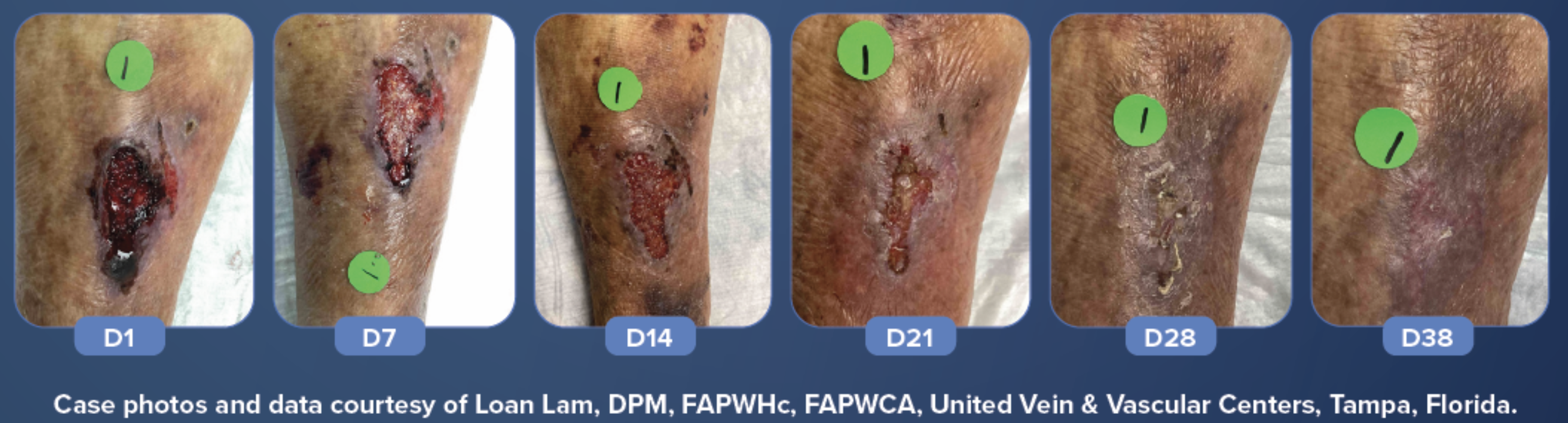
A non-diabetic, 80-year-old female with underlying chronic venous insufficiency presented to the treating clinician after a traumatic injury to her anterior leg that resulted in a wound. The patient was instructed to soak the wound daily with HOCl solution for 5 to 10 minutes, followed by application of Vashe Antimicrobial Wound Gel and wrapped with a conforming gauze roll. Dressings were changed daily.
Conclusions and Future Directions
Wound cleansing is an essential component of optimal wound management and healing. Advances in HOCl formulations make it an attractive cleanser and antimicrobial agent to support wound healing in conjunction with debridement techniques. For wound care professionals, incorporating these pure HOCl formulations into everyday use across a wide range of patients may standardize wound treatment and improve healing outcomes. Additional studies beyond case reports that demonstrate the safety and efficacy of the dual use of pure HOCl solution and gel will provide evidence for their combined use.
References
1. International Wound Infection Institute (IWII). Therapeutic wound and skin cleansing: Clinical evidence and recommendations. Wounds Int. 2025. https://woundsinternational.com/wp-content/uploads/2025/03/IWII_2025_Wound-cleansing-web-3.pdf
2. Sibbald RG, Elliott JA, Persaud-Jaimangal R, et al. Wound bed preparation 2021. Adv Skin Wound Care. 2021;34(4):183-195. doi:10.1097/01.ASW.0000733724.87630.d6
3. Mayer DO, Tettelbach WH, Ciprandi G, et al. Best practice for wound debridement. J Wound Care. 2024;33(Sup6b):S1-S32. doi:10.12968/jowc.2024.33.Sup6b.S1.
4. Haralović V, Mokos M, Špoljar S, Dolački L, Šitum M, Lugović-Mihić L. Hypochlorous acid: clinical insights and experience in dermatology, surgery, dentistry, ophthalmology, rhinology, and other specialties. Biomedicines. 2025;13(12):2921. Published 2025 Nov 28. doi:10.3390/biomedicines13122921
5. Robson MC. Treating chronic wounds with hypochlorous acid disrupts biofilm. Today’s Wound Clinic. 2014;8(9).
6. Day A, Alkhalil A, Carney BC, Hoffman HN, Moffatt LT, Shupp JW. Disruption of biofilms and neutralization of bacteria using hypochlorous acid solution: an in vivo and in vitro evaluation. Adv Skin Wound Care. 2017;30(12):543-551. doi:10.1097/01.ASW.0000526607.80113.66
7. Urgo Medical North America. Vashe Wound Solution. Accessed February 2026. https://www.urgomedical.us/products/vashe.
8. Nagoba BS, Suryawanshi NM, Wadher B, et al. Acidic environment and wound healing: A review. Wounds. 2015;27(1):5-11.
9. Sim P, Strudwick XL, Song Y, Cowin AJ, Garg S. Influence of acidic pH on wound healing in vivo: a novel perspective for wound treatment. Int J Mol Sci. 2022;23(21):13655. doi:10.3390/ijms232113655
10. Sakarya S, Gunay N, Karakulak M, Ozturk B, Ertugrul B. Hypochlorous acid: an ideal wound care agent with powerful microbicidal, antibiofilm, and wound healing potency. Wounds. 2014;26(12):342-50.
11. Herruzo R, Fondo Alvarez E, Herruzo I, Garrido-Estepa M, Santiso Casanova E, Cerame Perez S. Hypochlorous acid in a double formulation (liquid plus gel) is a key prognostic factor for healing and absence of infection in chronic ulcers. A nonrandomized concurrent treatment study. Health Sci Rep. 2023;6(10):e1497. Published 2023 Oct 25. doi:10.1002/hsr2.1497
12. Murphy C, Atkin L, Swanson T, et al. Defying hard-to-heal wounds with an early antibiofilm intervention strategy: wound hygiene. J Wound Care. 2020;29(Sup3b):S1-S26. doi:10.12968/jowc.2020.29.Sup3b.S1
13. Eriksson E, Liu PY, Schultz GS, et al. Chronic wounds: Treatment consensus. Wound Repair Regen. 2022;30(2):156-171. doi:10.1111/wrr.12994
14. Swanson T, Ousey K, Haesler E, et al. IWII Wound Infection in Clinical Practice consensus document: 2022 update. J Wound Care. 2022;31(Sup12):S10-S21. doi:10.12968/jowc.2022.31.Sup12.S10.
The views and opinions expressed in this content are solely those of the contributor, and do not represent the views of WoundSource, HMP Global, its affiliates, or subsidiary companies.